Why a Short List Can Make Leftovers Easier to Use
A short list of prepared ingredients makes leftovers easier to plan around, match with a meal, and use before they become another forgotten container.
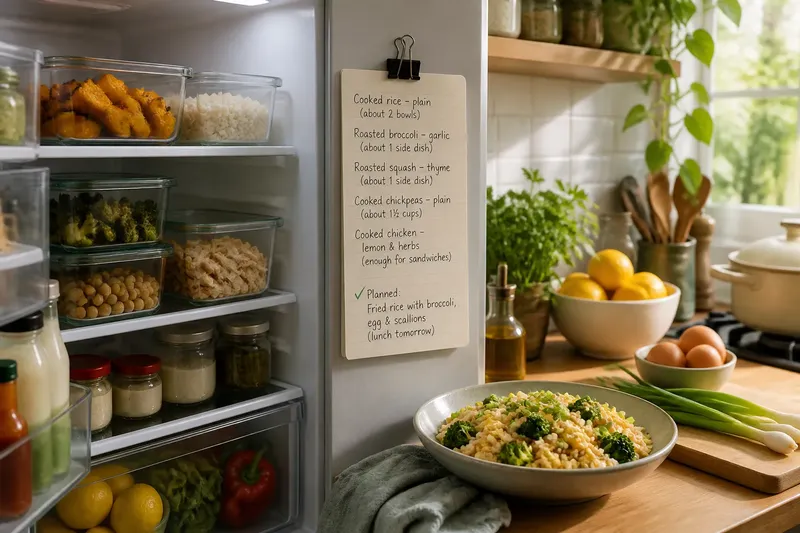
You open the refrigerator looking for lunch and find half a roasted squash, a bowl of rice, and a container whose contents require a moment of negotiation. A short list of prepared ingredients can make leftovers easier to use by giving the next meal a clear starting point. The list is not a menu or a record of every item in the kitchen. It is a brief note about food that is already cooked or partly prepared and needs a plausible next appearance.
This small planning habit often fails for ordinary reasons: the note is too detailed, too vague, or separated from the moment when anyone decides what to eat. Treating those failures as practical problems, rather than evidence that the household needs a better system, keeps the method light enough to use.
When the list becomes another household chore
A list can grow into an inventory project. Someone notes every condiment, unopened ingredient, and piece of produce, then stops updating it because the page has become more demanding than opening the refrigerator. Prepared ingredients deserve priority because they have already received some labor and may have fewer easy uses than untouched pantry staples.
Keep the list to a few useful details: what the food is, whether it is plain or seasoned, and any obvious limitation. “Cooked lentils, plain” says more for meal planning than “lentils.” “Roasted vegetables, thyme, for soup or grain bowl” captures both flavor and a likely route forward.
Do not add a separate note for every small remnant if several can travel together. A single entry such as “small roasted vegetable mix” is enough when the pieces are likely to be used in the same dish. The point is to help someone recognize an option, not to preserve a perfect archive of dinner.
When the notes are too vague to guide a meal
“Leftovers” is not an actionable entry. It leaves the next cook to identify the food, remember how it was seasoned, and decide whether it can fit the meal under consideration. That is a lot of detective work to assign to someone who may simply want lunch.
Name the ingredient in ordinary kitchen language. Add a short cue only when it changes what would pair well: “tomato rice,” “plain cooked chickpeas,” or “mild curry sauce.” If you know the food is already part of a larger preparation, say so. “Cooked chicken for sandwiches” gives a different prompt from “chicken in a spicy sauce.”
There is no need to capture a full recipe or reconstruct how the food was made. The useful question is whether a person opening the refrigerator can tell what the entry refers to and imagine a reasonable use. If not, add the missing clue and stop there.
When a promising ingredient has no obvious landing place
A list records what exists; it does not automatically produce a meal. The gap is usually a missing connection. A prepared ingredient may need a base, a fresh element, or a way to bring the parts together, and the list can make that missing piece easier to see.
For each entry, think in broad combinations rather than writing a fixed recipe. Cooked grains can be the base for vegetables and a dressing; beans can join greens, tortillas, or soup; roasted vegetables can accompany eggs, fold into pasta, or be blended into a sauce. These are prompts, not obligations. A household’s preferences and available ingredients should decide which pairing is sensible.
Say you have plain cooked rice and a container of roasted broccoli, but no complete plan. You write both entries, notice that eggs and scallions are available, and choose a fried-rice-style meal for the next lunch. The expected observable result is straightforward: the rice and broccoli appear in a named meal plan instead of remaining two unrelated notes. If the household does not want that meal, the list still helps reveal what kind of base or accompaniment is missing.
When the list ignores how much food is actually there
An ingredient name can sound more useful than the quantity allows. “Cooked beans” might mean enough for a family meal or a spoonful that could only enrich a sauce. A rough description prevents the list from promising a dish the container cannot support.
Use everyday scale words rather than measuring everything: “enough for two bowls,” “a small scoop,” or “about one side dish.” These descriptions are planning clues, not exact accounting. If the amount is too small to serve alone, note a supporting role such as “for soup,” “to add to eggs,” or “mix into dressing.”
When several small portions are similar, grouping them can simplify the decision. A little rice and a little cooked vegetable may be better noted together as “small portions for soup or a quick skillet” than treated as separate meal foundations. Keep the description honest about what the portions can do.
When seasoning narrows the possible uses
Prepared food carries its earlier choices into the next meal. Strongly seasoned beans may not suit every sauce, and vegetables cooked with a sweet glaze may be awkward in a dish that depends on sharp, savory flavors. A list that omits those cues can invite a poor match.
Record only the flavor detail that is likely to affect the next decision: spicy, smoky, garlicky, sweet, or plain. Then choose additions that can cooperate with it. A lemony dressing might brighten rich roasted vegetables; plain rice can accept a more assertive topping; a strongly spiced filling may need a quiet base rather than another competing seasoning.
If you are unsure how the prepared food will work, keep the next use flexible. A small amount can be added near the end of cooking or served beside a meal rather than mixed into the whole dish. This lets the cook adjust the combination without turning the entire meal into an argument between yesterday’s seasonings.
When the note is out of date
A useful list is brief partly because it is easy to revise. If the food has been used, remove the entry. If the plan changes, update the note while the container is still in view rather than relying on memory to fix it later.
Choose one place that is already convenient: a small pad near the refrigerator, a note on a kitchen whiteboard, or a shared phone note. A digital note can work well when the people choosing meals already check the same app; it is less useful if one person’s private list becomes a household secret. A paper note is visible, though it can be misplaced or buried under a grocery receipt. Pick the tool that matches existing habits.
Use a simple mark to distinguish food that has a meal planned from food still needing a use. A check mark or a brief “lunch” is enough. Avoid maintaining separate lists for every day, person, or storage area unless the household has a clear reason. More categories create more upkeep, and the rice remains unimpressed by the filing system.
When several people make different plans
In a shared kitchen, the list can fail because one person plans around an ingredient someone else already claimed. A note should make availability visible without turning leftovers into a reservation ledger. A short cue such as “for Tuesday lunch” or “free to use” can prevent avoidable confusion.
Agree on what the note means. If an entry only names food that is available, everyone should know that it is not a promise to use it. If someone has set it aside for a specific meal, say so plainly. That small distinction helps people plan without requiring a household meeting about the status of a container of beans.
Also agree on who removes an entry. The person who uses the food can cross it off, or the person who notices an empty container can do so. A system with no clear moment for cleanup tends to accumulate imaginary ingredients. Keep the responsibility ordinary and attached to an action that already happens.
How can the list stay useful without taking over?
What belongs on a leftovers list?
Include prepared ingredients that could shape a future meal, especially foods that are ready to use but not already assigned to one. Name the item and add a flavor or portion clue only when it changes the likely use.
Should the list include unopened groceries?
Usually not for this purpose. Unopened groceries may belong on a shopping or pantry list, while this note is meant to turn cooking already done into a starting point for the next meal.
How often should the list be updated?
Update it when prepared food is put away, used, or assigned to a meal. The timing matters less than keeping the note close enough to the food and the meal decision that it does not become a memory test.
What if nobody wants the listed food?
Do not force it into a meal simply because it appears on paper. Reconsider the portion, seasoning, and likely pairing, then choose a different use that suits the household or follow the food’s storage guidance.
Keep the note close to the next decision
The best place for the list is wherever meal choices are actually made: on the refrigerator door, beside the grocery pad, or in the shared note someone opens before cooking. A list hidden in a planner may be tidy and still miss its only useful moment. Visibility is part of the method, not decoration.
Begin with the prepared ingredients that are easiest to forget, not every item that could conceivably be eaten. Give each one a clear name, a helpful flavor or quantity cue, and a likely role when one comes to mind. That is enough structure to make a short list of leftovers useful without requiring anyone to manage a miniature restaurant.
For a short list of leftovers to keep helping, let it change with the kitchen: add food as it is put away, remove it when it is used, and leave room for plans to shift. The useful result is not a perfectly current record. It is one fewer moment in front of the refrigerator when good prepared food has no place to go.