The Quiet Work of a Regular Cloth-Care Routine
A regular cloth-care routine helps household linens stay useful: sort by fabric and color, tend small marks promptly, and store clean pieces with room to breathe.
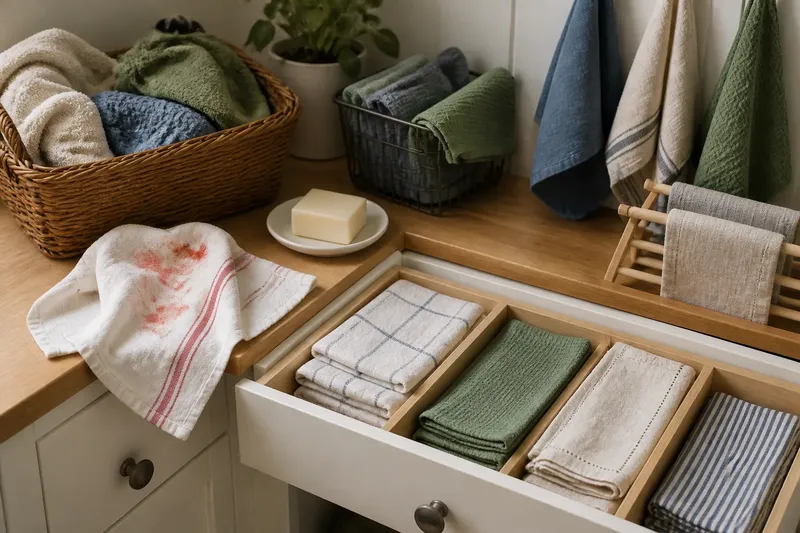
A tea towel comes off the oven handle with a faint tomato mark, while a clean one is already folded in the drawer. A regular cloth-care routine makes these small handoffs easier: sort what needs washing, notice marks before they settle, and put clean cloth away where it can be found without excavation.
Sort by what the cloth can tolerate
A laundry basket is a convenient place to collect fabric, but a poor place to make every washing decision. Cotton dish towels, linen napkins, wool blankets, and synthetic cleaning cloths do not necessarily belong in one load just because they have all reached the same basket.
Check care labels, then sort by color and fabric needs. Keep lint-shedding items, such as some cotton towels, apart from smooth clothing or microfiber cloths that readily pick up stray fibers. A small mesh bag can keep washable cloth napkins together, though it should not become a hiding place for damp fabric.
Sorting also reveals what is ready to wash and what is merely waiting for a second use. A hand towel used for drying clean hands is not in the same state as a rag used to wipe a spill from the floor. Give the latter its own place rather than allowing it to migrate back into the stack of guest towels by force of optimism.
Give small marks prompt attention
Fresh marks are easier to inspect than marks discovered after a cloth has been folded, stored, and rediscovered much later. Blot a spill with a clean cloth instead of rubbing it outward, then separate the marked item from clean laundry until it can be treated according to its fabric and the care label.
For a washable item, cool water is a sensible first consideration for many food or drink spills, but the fabric and the substance matter. Avoid applying heat or an aggressive cleaner before checking whether it could set the mark or damage the fibers. A hidden seam is a practical place to check a stain product before using it on a visible area.
Imagine a cotton napkin with a small berry spot after lunch. You blot it, keep it out of the hamper’s clean side, and check its label before choosing a suitable treatment; the expected observable result is that the mark is addressed while it is still easy to locate, even if a wash is not happening immediately. If the mark remains, inspect it before drying rather than assuming the dryer will finish the job. For valuable or delicate cloth, a cleaner who handles that fabric may be the better choice.
Keep damp cloth from becoming a separate problem
A wet dish towel folded into a hamper can develop an odor before laundry day arrives. Hang damp towels and cleaning cloths open until they are dry, then place them in the appropriate laundry area. A hook near the kitchen sink or a drying rack in a ventilated spot is more useful than a neat heap on the counter.
Keep cloth used for different household jobs distinct. A washable cloth for wiping counters, one for drying dishes, and one for cleaning the bathroom can have separate hooks, baskets, or colors. The distinction is not decoration; it helps prevent a cloth from moving between tasks without anyone noticing.
Wash cleaning cloths in a way suited to their material and use. Microfiber, for example, can lose its useful texture if washed with lint-producing items or treated with products its manufacturer advises against. Follow the label and product instructions where they apply, and do not mix cloths with materials that could contaminate them.
Make the clean stack easy to use
Storage affects whether cloth stays ready for its next ordinary job. Put frequently used towels and napkins within easy reach, and keep special table linens in a separate, clearly recognizable place. A drawer divider, shallow basket, or shelf can preserve those distinctions without requiring a complicated filing system.
Store cloth only when it is fully dry. Dampness trapped in a drawer can leave an unpleasant smell and may affect nearby fabric. Avoid packing shelves so tightly that folded items become difficult to remove; a stack that collapses whenever one towel is needed tends to invite a second, less orderly stack beside it.
Fold by use rather than by an idealized display. Kitchen towels can be stacked together, cleaning cloths can sit in their own bin, and napkins can be grouped by size or occasion. If a cloth has a stain that needs another look, keep it apart from ready-to-use linen so it does not quietly rejoin the clean supply.
What should happen when care decisions are unclear?
Should stained cloth be washed right away?
Address the mark promptly, but that does not always mean starting a full load. Blot or rinse as appropriate for the fabric, then let the item wait somewhere separate until it can be washed safely.
Can kitchen towels and cleaning cloths share a load?
That depends on what the cloths have touched and on their care instructions. Keep cloths used for different or potentially contaminating jobs apart, and wash them in a way suited to the material.
How can an older stain be handled?
Identify the fabric and inspect the mark before choosing a treatment. Test a suitable product discreetly, and consider a fabric-care professional for delicate or valuable items rather than escalating to harsher chemicals.
Where should clean linens be stored?
Choose a dry, clean place that is easy to reach and not packed so tightly that cloth is crushed or hard to remove. Keep items used for different tasks in separate, recognizable groups.
Let the routine stay small
A useful cloth-care routine does not need a special laundry day or a new set of containers. Keep one place for damp cloth to dry, separate laundry by the needs of its contents, and return clean items to their usual spots. When a mark appears, deal with it before the cloth disappears into the week.
Those small habits make the regular cloth-care routine easier to repeat and help household fabric remain available for its intended work. The practical test is modest: when a clean towel or napkin is needed, it should be dry, easy to find, and not mistaken for a cleaning rag.